Last updated 2026-08-18
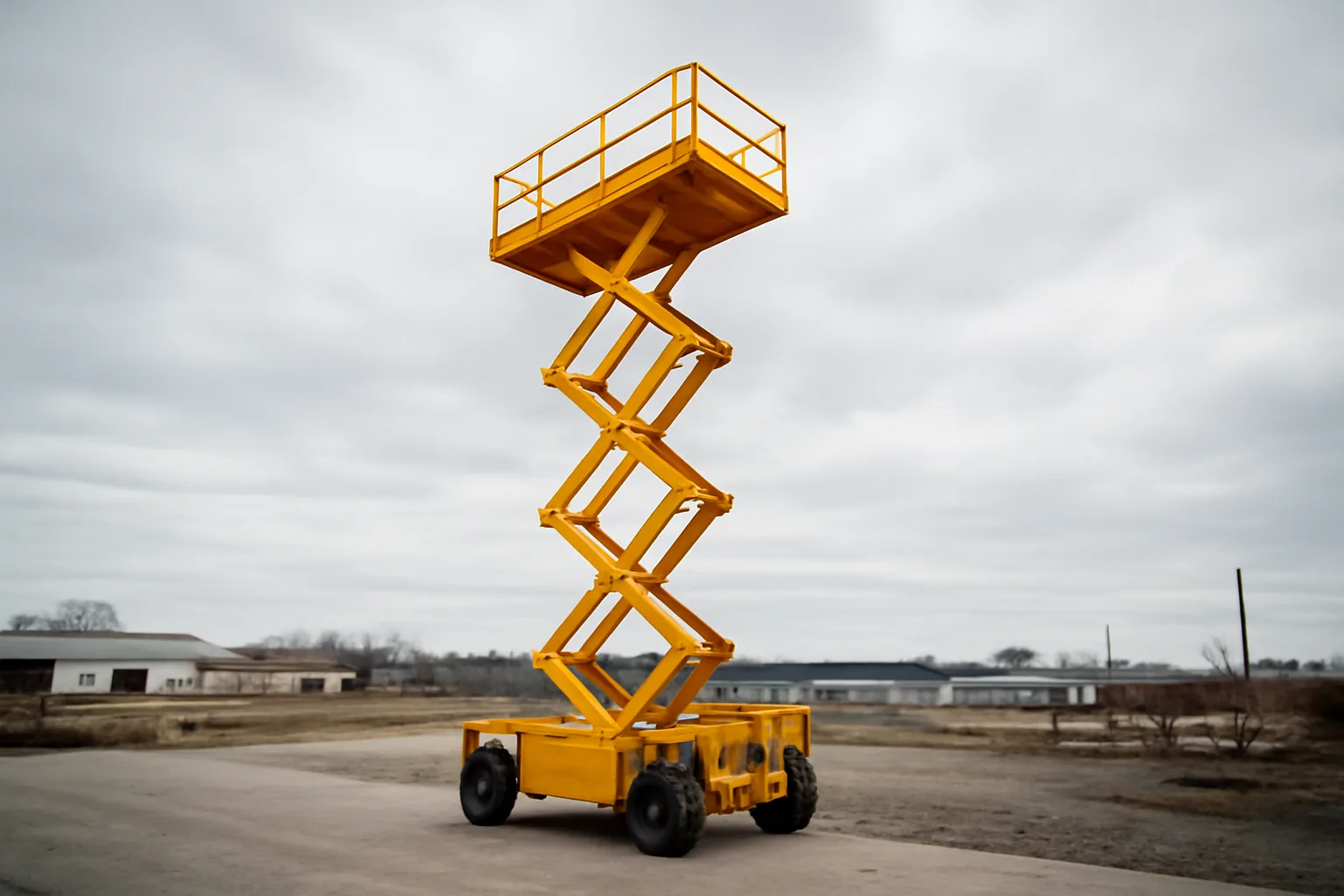
TL;DR
Connecticut has no single statewide "scissor lift rental license." You renew a general business registration with the Secretary of State, keep a sales tax permit active with DRS, carry general liability and inland marine insurance, and make sure every operator holds current OSHA-aligned training. Plan four to eight weeks for the full renewal cycle if your paperwork is in order.
Do you need a license for scissor lift rental in Connecticut?
Not a scissor-lift-specific one. Connecticut does not issue a dedicated aerial work platform rental license at the state level. What you actually need is a stack of general business credentials that, taken together, give you legal authority to rent equipment to paying customers.
The first piece is your business entity registration with the Connecticut Secretary of State. If you operate as an LLC or corporation, that entity has to be active and in good standing. Annual reports for LLCs cost $80 per year and are due by March 31 [1]. Let that lapse and you lose the legal right to do business in the state.
The second piece is a Sales and Use Tax Permit from the Connecticut Department of Revenue Services. Equipment rental revenue is taxable in Connecticut under Conn. Gen. Stat. § 12-407, which defines the rental of tangible personal property as a taxable sale of services [2]. You collect 6.35% sales tax on each rental transaction and remit it to DRS on a filing schedule they assign based on your volume. Renewing the permit itself is free. Failing to file returns gets expensive fast.
Some municipalities layer on a local business license or a certificate of occupancy if you run a physical yard. Hartford, Bridgeport, and New Haven each have their own municipal licensing offices. Confirm your city's requirements before you assume the state credentials are enough.
If you rent to contractors working on public projects, some customers will ask for a Certificate of Insurance showing limits that meet Connecticut DOT or municipal specs. That's not your license, but it works like one in the field.
What does the Connecticut business registration renewal actually involve?
The LLC Annual Report is the document most operators mean when they ask about "renewal." You file it online through the Connecticut Secretary of State's business portal, pay $80, and you're done for another year [1]. It confirms your registered agent, principal address, and that your entity is still alive.
If you incorporated instead of forming an LLC, the annual report fee for a stock corporation is $150 [1]. Nonprofit corporations pay $50. These are hard numbers set by statute, not subject to change without a legislative amendment. Confirm current figures at ct.gov before filing, since the state adjusts them occasionally.
The Sales and Use Tax Permit renewal is separate. Connecticut DRS does not charge a renewal fee for the permit itself, but you have to file returns on time to keep it active [2]. If DRS revokes your permit for non-compliance, reinstatement requires back filings, penalties, and interest before they restore it. That's a business interruption nobody budgets for.
One more credential worth mentioning. If any of your employees hold a Connecticut contractor's license through the Department of Consumer Protection, those licenses renew on two-year cycles with their own CE requirements. Your rental business probably doesn't need a contractor's license on its own. But if you offer installation, servicing, or erection of the equipment on top of renting it, you may cross into licensed contractor territory. Confirm with DCP [3].
Budget $80 to $150 annually for the Secretary of State filing, zero additional cost for DRS permit maintenance if you stay current on filings, and variable local fees depending on your municipality.
How much does scissor lift rental cost in Connecticut?
Two separate cost questions live inside this one. The first is what you charge customers. The second is what it costs you to keep the business licensed and insured.
On the customer-facing side, scissor lift rental rates in Connecticut track the national market fairly closely. Daily rates for a standard electric slab scissor (26 to 32 feet working height) run roughly $200 to $350 per day from established rental yards. Weekly rates are typically 3x to 3.5x the daily rate. Monthly rates land around 10x to 12x the daily rate. Rough-terrain models and larger platforms (40-plus feet) push higher. These are market ranges drawn from publicly posted regional pricing. Your actual rates depend on machine age, local competition, and fuel or delivery costs.
On the business cost side, here's an honest breakdown of what most Connecticut scissor lift rental operators carry annually:
| Expense | Typical Annual Range | Notes |
|---|---|---|
| LLC Annual Report (SoS) | $80 | Due March 31 each year [1] |
| General Liability Insurance | $3,000 to $8,000+ | Varies with fleet size and claims history |
| Inland Marine / Equipment Floater | $1,500 to $6,000+ | Per machine values drive this hard |
| Commercial Auto (delivery trucks) | $2,000 to $5,000+ | If you operate delivery vehicles |
| Sales Tax Permit Filing (DRS) | $0 permit fee | Late penalties are steep |
| OSHA Training (per operator) | $150 to $400 per person | Refresher every three years, roughly |
| Local Business License | $0 to $300+ | Municipality-dependent |
Nobody has great aggregate data on what the median Connecticut aerial work platform rental operator spends annually on compliance alone. The closest proxy is the equipment rental industry at large, where overhead ratios (insurance, licensing, maintenance) often run 15 to 25 percent of gross revenue for small fleets.
Want a cross-state comparison? See our guides on scissor lift rental renewal in New York or the scissor lift rental renewal in Florida breakdown for a sunbelt contrast.
How long does scissor lift rental renewal take in Connecticut?
If everything is current and you're doing routine annual maintenance, the Secretary of State LLC annual report processes online in one to three business days after you submit and pay [1]. You get a confirmation immediately. The state posts the updated status to its public business lookup within a few days.
The DRS sales tax permit has no formal "renewal" filing. You just keep filing your returns on schedule. If you've let something lapse, reinstatement can take four to six weeks depending on DRS backlog and how many periods you need to reconcile.
Insurance renewals run on your broker's clock and the underwriting market. A clean account with no losses and a fleet under ten machines typically renews in two to four weeks. If you've had a claim or you're adding machines, budget four to eight weeks for underwriting questions to clear.
The slowest part of most renewals isn't the paperwork. It's the OSHA-required operator training documentation. OSHA 29 CFR 1926.453 and 29 CFR 1910.67 both require that aerial work platform operators be trained by a qualified person [4]. As the rental company, you're generally responsible for training your own employees who operate the machines during delivery or demo. Your customers are responsible for training their operators, though many rental companies provide documentation of available training to cut their liability exposure. Getting refresher training scheduled and documented for a team of four or five people easily adds two to three weeks to a renewal cycle if you wait until the last minute.
Start eight weeks out and the timeline is comfortable. Start two weeks out and it's stressful but usually doable for the state filings, tight on insurance if anything needs underwriting review.
What insurance do Connecticut scissor lift rental companies need?
Connecticut doesn't mandate specific insurance types or limits for equipment rental companies by statute, but the market and your customers set the floor.
General liability at $1 million per occurrence and $2 million aggregate is the de facto minimum for any rental yard that wants commercial customers or general contractors. Many GCs require a certificate showing $2 million per occurrence before they'll allow your equipment on their jobsite.
Inland marine insurance (sometimes called an equipment floater) covers your machines while they're in transit or on a customer's site. This is where the real exposure lives in a rental business. A $60,000 rough-terrain scissor lift sitting on a job site for three weeks without inland marine coverage is a serious gap. Standard commercial property policies typically exclude equipment away from your premises.
Commercial auto coverage applies to any truck or trailer you use for delivery. Connecticut requires minimum liability limits under Conn. Gen. Stat. § 38a-335, but those statutory minimums sit far below what a commercial rental company should carry given the value of cargo [5].
Umbrella or excess liability is worth discussing with your broker once your fleet gets above five or six machines. A single tipover involving a scissor lift can generate claims that blow past a $1 million primary policy quickly.
If you're tracking your fleet with telematics, some underwriters offer modest premium credits for documented GPS monitoring. ScissorPath's $179 one-time telematics kit is built for exactly this kind of small fleet, and some brokers will ask for documentation of your tracking setup at renewal.
Confirm current insurance requirements with your broker and with the Connecticut Insurance Department [6] rather than treating any published range as a guarantee.
What OSHA and safety rules apply to scissor lift rental in Connecticut?
Connecticut runs a State Plan for public sector workers through CONN-OSHA, but private sector employers fall under federal OSHA [7]. That means the federal standards at 29 CFR 1926.453 (construction) and 29 CFR 1910.67 (general industry) are the operative rules for your employees and your customers' workers [11].
29 CFR 1926.453 states: "The employer shall comply with the manufacturer's specifications and limitations applicable to the operation of any and all aerial lifts" [4]. That rule applies to the renters who operate your machines, and it also shapes what documentation you should hand over with every rental: the OEM operator manual, rated capacity labels, and recent inspection records.
For your own employees who operate machines during delivery, staging, or demonstration, OSHA requires training by a qualified person before they use the equipment. There's no federal certification card requirement, but a documented training record with the trainer's name, date, topics covered, and employee signature is the standard that holds up in an inspection.
ANSI/SAIA A92.22 (Safe Use of Mobile Elevating Work Platforms) and A92.24 (Training Requirements for Mobile Elevating Work Platforms) have been increasingly referenced by OSHA inspectors as the industry consensus standard [8]. You don't need to own every ANSI document, but your training program should align with what those standards describe.
Connecticut's own CONN-OSHA office provides consultation services to private employers at no cost, which is worth knowing if you want a voluntary compliance review before your next federal OSHA visit [7].
What happens if you miss the Connecticut renewal deadline?
Missing the March 31 LLC annual report deadline doesn't dissolve your entity right away, but Connecticut will administratively revoke your entity status if the report stays unfiled. The Secretary of State's office lists dissolved or revoked entities publicly, which means customers can look you up and see the problem [1].
Reinstatement requires filing all missing annual reports, paying all back fees, and submitting a reinstatement application. The longer you wait, the more it costs and the harder it gets. Some entities that go two or three years without filing end up having to form a new LLC entirely because their name has been released.
On the DRS side, failure to file sales tax returns triggers automatic penalties. Connecticut charges 10 percent of the tax due or $50, whichever is greater, for late filing, plus interest at 1 percent per month [2]. If DRS suspects intentional noncompliance, they can revoke your permit and require a cash bond before reinstatement.
The insurance side is more immediate. If your policy lapses and a machine causes damage or injury during that gap, you are uninsured. Courts don't extend grace periods on coverage lapses.
How does Connecticut compare to nearby states for rental renewal requirements?
Connecticut sits mid-range among northeastern states for regulatory complexity. New York adds city-level licensing in New York City that Connecticut simply doesn't have. Massachusetts has its own contractor licensing board that can touch equipment rental if services are bundled. Rhode Island is lighter on the equipment rental side.
Among the states with published guides on this site, the scissor lift rental renewal in Delaware process is often called simpler because Delaware's franchise tax structure differs from Connecticut's annual report model. The scissor lift rental renewal in Florida guide covers a state with higher fleet concentrations and a more developed insurance market, which sometimes produces lower premiums for comparable coverage.
Here's the Connecticut wrinkle that doesn't exist everywhere. Connecticut's 6.35% sales tax on equipment rental is collected on every transaction [2]. Some states exempt short-term equipment rental from sales tax entirely or apply different rules for construction equipment. Connecticut has no such exemption for scissor lifts, so your DRS compliance is a recurring operational obligation, not a one-time registration.
| State | Annual Report Fee | Sales Tax on Rental | State OSHA Plan |
|---|---|---|---|
| Connecticut | $80 (LLC) | 6.35% [2] | Public sector only [7] |
| Delaware | $300 franchise tax minimum | No sales tax on some rentals | Federal OSHA |
| Florida | $138.75 (LLC) | 6% + surtax | Federal OSHA |
| Illinois | $75 (LLC) | 6.25% + local | Federal OSHA |
What's the year-one versus renewal difference for Connecticut rental companies?
Year one is heavier. You're forming the entity (paying filing fees once), applying for your DRS permit (free but slow), shopping and binding insurance from scratch, buying or financing machines, and getting your physical location and yard set up. You may also register with your municipality, obtain a certificate of occupancy if you have a rental office or yard, and possibly get a stormwater permit if your yard has machine washing or fluid storage [9].
The Connecticut Department of Energy and Environmental Protection (DEEP) regulates stormwater discharge under its industrial stormwater general permit [9]. If your yard stores oil, hydraulic fluid, or diesel on site, you may have DEEP notification or permit obligations. This surprises a lot of first-year operators.
Renewal years strip out the one-time formation costs and the initial insurance shopping. You're running the same checklist every twelve months: Secretary of State annual report by March 31, DRS returns on whatever schedule they've assigned you, insurance renewal four to six weeks before expiration, OSHA training records current for any employee who's had a lapse, and a quick check with your municipality on any local license.
ScissorPath's telematics kit comes up again here because one thing that helps at renewal is documented machine utilization and location history. Underwriters and customers both want to see that you're managing your fleet actively, and a $179 one-time device installation is cheaper than one unexplained loss on your insurance record.
Where do you actually file each renewal document in Connecticut?
Here's the concrete filing map.
Secretary of State (annual report): File at business.ct.gov. You'll need your business ID number and the last four digits of your authorized signer's SSN or ITIN. Pay $80 by credit card online. No paper required [1].
DRS (sales tax returns): File at myconnect.ct.gov, the DRS online portal. Returns are due monthly, quarterly, or annually depending on your assigned filing frequency. Your permit number is on the permit DRS mailed you when you registered. If you can't find it, DRS has a business lookup tool [2].
Insurance: Through your commercial lines broker. Connecticut's Insurance Department licenses brokers and carriers. To verify your broker's license status, use the department's online lookup [6].
CONN-OSHA (voluntary consultation): Contact the Connecticut Department of Labor's CONN-OSHA division. The consultation program is free for private employers who want help reviewing safety programs before an inspection [7].
Local business license: Varies. Search your city or town's official website for "business license" or "certificate of occupancy." There's no statewide portal that consolidates local filings.
If you're doing any work that touches Connecticut's prevailing wage law (Conn. Gen. Stat. § 31-53), your rental customers on public projects need to pay prevailing wages to operators, and your rental agreements should reflect who's responsible for operator wages [10]. This doesn't directly affect your renewal, but it comes up in contractor relationships and belongs in your contract language.
Frequently asked questions
Do you need a license for scissor lift rental in Connecticut?
There's no Connecticut-specific scissor lift rental license. You need an active business entity registration with the Secretary of State, a Sales and Use Tax Permit from DRS since equipment rental is taxable under Conn. Gen. Stat. § 12-407, and possibly a local business license depending on your municipality. OSHA training requirements for operators apply separately under federal OSHA standards.
How much does scissor lift rental cost in Connecticut for customers?
Daily rates for a standard electric slab scissor lift run roughly $200 to $350 in Connecticut. Weekly rates are approximately 3x to 3.5x the daily rate. Monthly rates land around 10x to 12x the daily rate. Rough-terrain models and larger platforms cost more. These are market-range figures; actual pricing varies by vendor, machine age, and delivery distance.
How long does scissor lift rental renewal take in Connecticut?
The LLC annual report processes in one to three business days online. Insurance renewal takes two to eight weeks depending on your claims history and fleet size. If operator training records need updating, add two to three weeks. Starting the full renewal cycle eight weeks before your policy or registration expiration gives you comfortable margin without a scramble.
What is the Connecticut LLC annual report fee for a rental business?
Connecticut LLCs pay $80 per year, due March 31. Corporations pay $150. The report is filed online through the Secretary of State's business portal. Missing the deadline doesn't immediately dissolve your entity, but administrative revocation follows if the filing stays delinquent, which makes your business status public and cuts off your legal ability to operate.
Is scissor lift rental revenue taxable in Connecticut?
Yes. Connecticut taxes the rental of tangible personal property, including equipment, as a taxable service under Conn. Gen. Stat. § 12-407. The current rate is 6.35%. You collect the tax from customers on each transaction and remit it to the Department of Revenue Services on the filing schedule DRS assigns you. There's no exemption for construction equipment rentals.
What insurance does a Connecticut scissor lift rental company need?
Most operators carry general liability at $1 million per occurrence minimum, inland marine coverage for machines off-premises, and commercial auto for delivery vehicles. Many commercial customers require $2 million per occurrence limits before allowing equipment on their site. Connecticut statute sets minimum auto liability limits under Conn. Gen. Stat. § 38a-335, but those minimums are well below commercial norms for a rental fleet.
Does Connecticut have a state OSHA plan that applies to scissor lift rental?
Connecticut's CONN-OSHA plan covers public sector workers only. Private sector scissor lift rental businesses and their employees fall under federal OSHA, specifically 29 CFR 1926.453 for construction and 29 CFR 1910.67 for general industry. Connecticut's CONN-OSHA division does offer free voluntary consultation services to private employers who want a safety program review.
What OSHA training do scissor lift rental employees need in Connecticut?
Federal OSHA at 29 CFR 1926.453 requires operators to be trained by a qualified person and to comply with manufacturer specifications. There's no federal certification card requirement, but documented training records with dates, topics, and trainer identification are the standard. ANSI/SAIA A92.24 outlines the training requirements that OSHA inspectors increasingly reference as the industry consensus standard.
What happens if my Connecticut LLC annual report lapses?
Connecticut will administratively revoke your entity status, making the revocation visible in the public business lookup. Reinstatement requires filing all missing reports, paying back fees, and submitting a reinstatement application. Entities revoked for multiple years sometimes lose their name to new filings and must start fresh. Revocation also voids your legal authority to enter contracts or conduct business in the state.
Do Connecticut scissor lift rental companies need an environmental permit?
Possibly. If your yard stores fuel, hydraulic fluid, or oil, or if you wash machines on site, Connecticut DEEP's industrial stormwater general permit may apply. The Department of Energy and Environmental Protection regulates stormwater discharges, and equipment rental yards with significant outdoor operations can fall within its scope. Check with DEEP before building out your yard.
What's the sales tax rate on scissor lift rental in Connecticut?
The state sales and use tax rate is 6.35%, applied to the full rental charge including any required fees that are part of the transaction. You collect this from your customer and remit to DRS. There are no Connecticut exemptions for construction equipment rentals. Misclassifying rental revenue as exempt without a valid exemption certificate from the customer creates DRS liability.
How does Connecticut's scissor lift rental renewal compare to Delaware or Florida?
Connecticut charges $80 annually for LLC reports and taxes rentals at 6.35%. Delaware has a higher franchise tax minimum but different sales tax treatment on some rentals. Florida charges $138.75 for LLC annual reports and applies a 6% state rate plus local surtax. All three states use federal OSHA for private sector employers. See the Delaware and Florida renewal guides on this site for detail.
Can I operate a scissor lift rental business out of my home in Connecticut?
Technically an LLC can be registered to a home address, but operating a physical rental yard with heavy equipment at a residential property will likely conflict with local zoning ordinances. Most municipalities require equipment rental operations to be in commercially or industrially zoned areas. Check with your town's planning and zoning department before assuming a home-based setup is permissible.
Where do I file the Connecticut annual business report for my rental company?
File online at business.ct.gov using your business ID number. Payment is $80 by credit card. The portal is available year-round and filings process in one to three business days. The Secretary of State's office updates the public business lookup within a few days of processing, so your "active" status becomes visible to customers and partners searching your company shortly after filing.
Sources
- Connecticut Secretary of State, Business Services (annual report filing and fees): Connecticut LLCs pay $80 for the annual report, due March 31; corporations pay $150
- Connecticut Department of Revenue Services, Sales and Use Taxes: Equipment rental revenue is taxable in Connecticut as a sale of services; current rate is 6.35%
- Connecticut Department of Consumer Protection, License Lookup (eLicense): Connecticut DCP licenses contractors; equipment rental companies that also erect or service equipment may need a contractor's license
- OSHA 29 CFR 1926.453, Aerial Lifts: OSHA requires employers to comply with manufacturer specifications for aerial lifts and that operators be trained by a qualified person; verbatim: 'The employer shall comply with the manufacturer's specifications and limitations applicable to the operation of any and all aerial lifts'
- Connecticut Insurance Department: Connecticut Insurance Department licenses brokers and carriers; operators can verify their broker's license status
- Scaffold and Access Industry Association, ANSI A92 Standards: ANSI/SAIA A92.24 sets training requirements for mobile elevating work platforms and is increasingly referenced by OSHA inspectors as the industry consensus standard
- Connecticut DEEP, General Permit for the Discharge of Stormwater Associated with Industrial Activity: Connecticut DEEP regulates stormwater discharge from industrial yards; equipment rental operations with outdoor storage or machine washing may fall under this general permit
- OSHA 29 CFR 1910.67, Vehicle-Mounted Elevating and Rotating Work Platforms: Federal OSHA 29 CFR 1910.67 applies to aerial work platforms in general industry settings and requires operator training