Last updated 2026-08-18
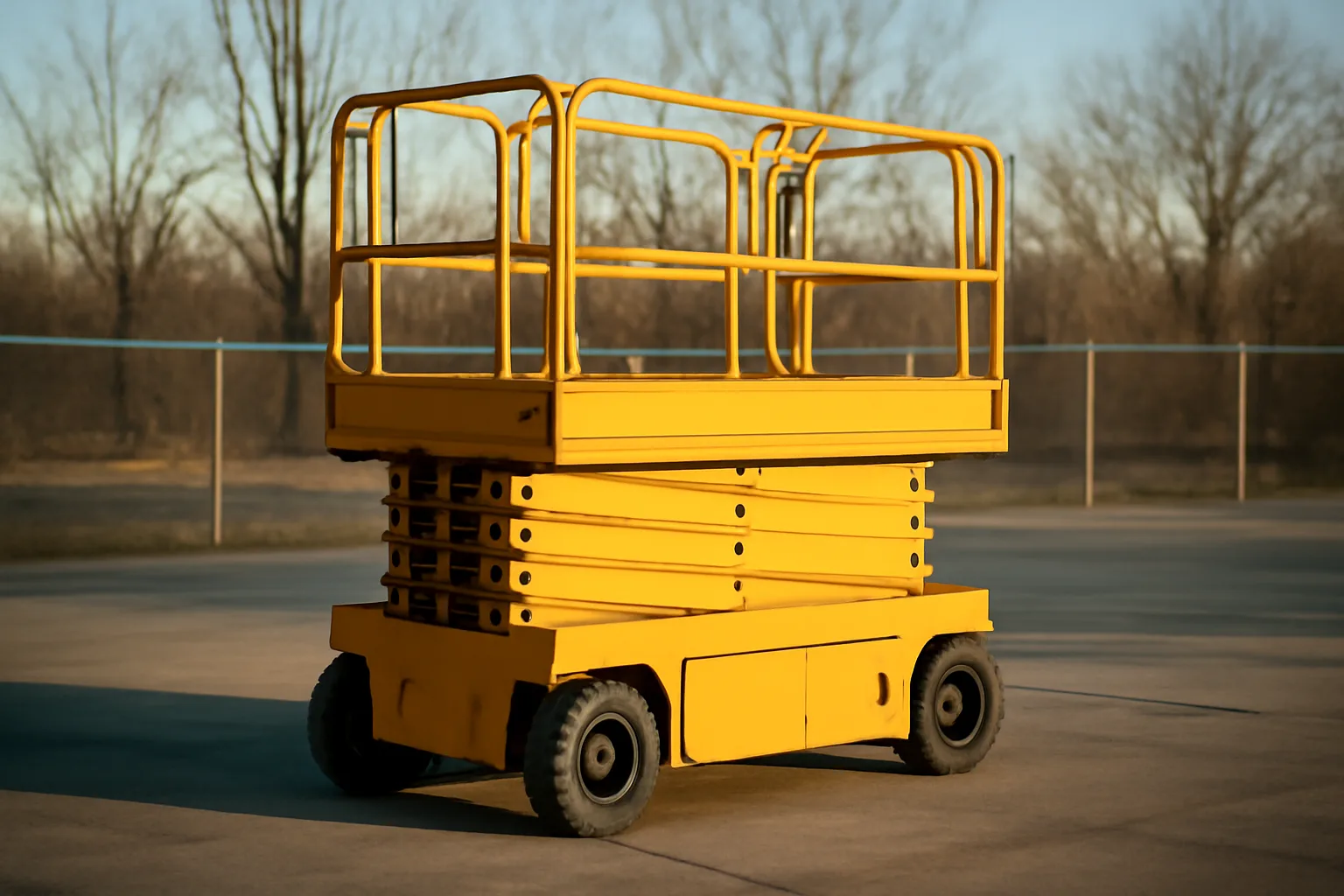
TL;DR
Connecticut has no dedicated 'scissor lift rental license.' To rent scissor lifts legally, you register a business with the Secretary of the State, get a sales tax permit from DRS, carry commercial general liability and inland marine insurance, and make sure every operator gets OSHA-compliant aerial work platform training before touching a machine. Budget $500 to $2,000 for first-year compliance filings.
Do you need a license for scissor lift rental in Connecticut?
No single 'scissor lift rental license' exists in Connecticut. There's no specialty equipment-rental dealer license at the state level the way some states license contractors or car dealers. What you need is a layered set of registrations, tax permits, and safety documentation that together form your legal paper trail.
The Connecticut Secretary of the State requires any business operating under a name other than the owner's legal name to register. An LLC costs $120 to form online as of the current fee schedule [1]. A corporation costs $250. Sole proprietors using a trade name file a Trade Name Certificate with the local town clerk, typically $5 to $20 depending on the municipality.
Rental receipts are taxable in Connecticut. You register with the Department of Revenue Services for a sales and use tax permit. That permit is free, but you'll collect Connecticut's 6.35% sales tax on every rental transaction and remit it on a schedule DRS assigns you [2].
OSHA 29 CFR 1926.453 and 29 CFR 1910.67 govern aerial work platforms in construction and general industry. Those rules require operators to be trained and evaluated before use [3]. You're not the employer of your customers' workers, so you don't carry that training duty directly. Your rental agreement still needs to document who does, and many commercial customers will ask to see your machine inspection records before they sign.
So the license picture in Connecticut is business entity registration plus tax permit plus safety documentation. No exotic permits. Skip any layer, though, and you create real exposure.
What business registrations does a Connecticut scissor lift rental company need?
Start with entity formation. Most small equipment rental operators pick an LLC because it separates personal assets from business liabilities and costs less to maintain than a corporation. File Articles of Organization with the Connecticut Secretary of the State through their online portal [1]. The $120 fee is paid at filing. You'll also file an annual report each year for $80 to keep the LLC active.
Say you want to operate under a brand different from your LLC name, like 'Hartford Lift Rentals LLC' doing business as 'CT Aerial Rentals.' You don't file a separate trade name at the state level. The LLC registration covers that. But a sole proprietor using any name other than a personal name goes to the town clerk and files a Trade Name Certificate.
Get an Employer Identification Number from the IRS even if you have no employees yet. It's free, takes about five minutes online, and banks require it to open a business checking account [4].
Then register with Connecticut DRS for a sales and use tax permit. Connecticut General Statutes Section 12-407 defines rental of tangible personal property as a taxable sale, so scissor lift rental receipts are subject to the 6.35% rate [2]. Registration is free through the DRS myConneCT portal [10]. You'll pick a filing frequency based on expected tax liability. Most new operators start quarterly.
Hire employees and you add one more step: register with Connecticut DOL for unemployment insurance and withholding tax [5]. That registration is separate from DRS and uses a different portal.
That's the full state-level paper path. Nothing buried, nothing exotic.
What insurance do you need to rent scissor lifts in Connecticut?
Insurance is where most new operators underestimate the requirement. Equipment rental companies face two distinct exposures: damage to the machine and injury caused by the machine.
Commercial General Liability covers bodily injury and property damage claims arising from your business operations. A $1 million per occurrence / $2 million aggregate policy is the floor most commercial customers will accept, and it's what most lenders require if you finance equipment. Annual premiums for a small fleet (two to five machines) typically run $2,000 to $5,000 depending on fleet value, your claims history, and the insurer. Get quotes from carriers that specifically write inland marine and equipment floater policies.
Inland Marine (Equipment Floater) covers physical damage to your scissor lifts while they're off your premises, which is all the time when a machine is rented. A standard commercial property policy excludes equipment in transit or at a customer's job site. Inland marine fills that gap. Expect $800 to $2,500 per year for a two-to-five machine fleet.
Commercial Auto covers your truck or trailer when you deliver and pick up machines. Use a personal vehicle even occasionally for deliveries and a personal auto policy will deny the claim. You need a commercial auto endorsement or a separate commercial auto policy.
Connecticut doesn't mandate a specific insurance minimum for equipment rental companies at the state level. Your rental agreement, your lender, and your customers will each set a floor. Match the highest of the three.
One more thing. Add a 'waiver of subrogation' endorsement to your CGL and inland marine policies. Large commercial contractors require it, and without it you'll lose jobs to competitors who have it.
What OSHA rules apply to scissor lift rentals in Connecticut?
Connecticut runs its own OSHA-approved State Plan, but it covers state and municipal employees only. It's administered by the Connecticut Department of Labor's Division of Occupational Safety and Health [6]. Private-sector employers fall under federal OSHA directly.
The two federal standards that matter most for scissor lift rentals are 29 CFR 1926.453 (Aerial Lifts, construction) and 29 CFR 1910.67 (Vehicle-Mounted Elevating and Rotating Work Platforms, general industry) [9]. The construction standard states that 'only trained persons shall operate an aerial lift' [3].
You're not the operator's employer, so the training obligation isn't yours. You are the equipment owner, though, and OSHA's multi-employer citation policy means you can be cited as a 'controlling employer' if you knew or should have known an untrained worker was using your machine. Document everything: inspection records for each machine, a rental agreement clause confirming the renter accepts operator training responsibility, and pre-rental machine walkthroughs.
ANSI/SAIA A92.22, the industry's Safe Use standard for mobile elevating work platforms, gives more specific operator training guidance [7]. It's not a federal regulation, but OSHA regularly cites recognized industry standards, so following A92.22 documentation practices is your best defense.
Pre-rental inspections matter too. OSHA 29 CFR 1926.453(b)(2) requires aerial lifts to be inspected before use each day [3]. Provide a documented inspection checklist with every rental and require the renter to complete and keep it. That paper trail protects you when a machine comes back damaged and the renter claims it was already broken.
How much does scissor lift rental cost in Connecticut?
There are two cost conversations here: what you'll charge customers, and what it costs you to operate.
On the customer-facing side, scissor lift rental rates in Connecticut track regional Northeast pricing, which runs slightly above the national average. Based on national survey data from the American Rental Association, daily rates for a standard 19-to-26 foot electric scissor lift range from $175 to $280 per day, $450 to $750 per week, and $1,100 to $1,800 per four-week period [8]. Larger rough-terrain units (32 to 40 foot, diesel) command $350 to $550 per day. These are indicative ranges. Confirm current market rates by getting quotes from regional competitors like Sunbelt, United Rentals, and local independents in your specific Connecticut market.
Delivery and pickup is often priced separately, usually $150 to $350 round trip depending on distance, and Connecticut fuel costs move that number directly.
On the operator's cost side, here are the major first-year cost buckets for a two-machine startup.
| Cost Item | Estimated Range | Notes |
|---|---|---|
| LLC formation (CT SOS) | $120 | One-time filing fee [1] |
| Annual LLC report | $80 | Due each year |
| Sales tax permit (DRS) | $0 | Free registration [2] |
| CGL insurance (annual) | $2,000-$5,000 | Two-to-five machine fleet |
| Inland marine insurance | $800-$2,500 | Equipment floater |
| Commercial auto | $1,200-$3,000 | If you deliver |
| Machine purchase (used 19ft electric) | $8,000-$18,000 | Per unit, varies by age/hours |
| Machine purchase (new 19ft electric) | $22,000-$35,000 | Per unit, OEM list |
| Trailer (if needed) | $3,000-$8,000 | One-time |
| Rental agreement legal review | $500-$1,500 | Attorney, one-time |
The machines are the overwhelming cost driver. Everything else is noise next to them.
How long does scissor lift rental business setup take in Connecticut?
Do everything online, hit no snags, and you can have the core registrations in place in about one to two weeks. Here's a realistic timeline.
Day 1: File your LLC online with the Connecticut Secretary of the State. Processing is typically same-day to three business days for online filings [1].
Day 2-3: Apply for your EIN at IRS.gov. Approval is instant online during business hours [4].
Day 3-5: Register with Connecticut DRS for a sales and use tax permit through myConneCT. DRS typically issues the permit within a few business days of a complete application [10].
Week 1-2: Shop insurance. Getting three competitive quotes for CGL and inland marine takes the most time because underwriters ask for equipment schedules, safety procedures, and rental agreement drafts. Budget a full week.
Week 2-3: Have an attorney review your rental agreement. A template you found online is not adequate for equipment that can kill someone. Expect $500 to $1,500 for a competent equipment-rental attorney to review or draft the agreement.
Week 2-4: Source your machines. Finding quality used scissor lifts in Connecticut and arranging pre-purchase inspections takes time. Don't rush the equipment decision. It's your biggest capital commitment.
Realistic total: three to five weeks from decision to first rental if you move steadily. Six to eight weeks is more common when insurance quoting and machine sourcing drag out.
Processing times and fees change. Confirm current timelines directly with the Connecticut Secretary of the State and DRS before you set a launch date.
Does Connecticut require any permits for the machines themselves?
Connecticut doesn't require a state-level equipment registration for scissor lifts the way vehicles require DMV plates. Your machines are personal property, not titled vehicles.
Transport them on public roads, though, and the trailer pulling them is a titled vehicle that needs Connecticut DMV registration. If a loaded trailer exceeds 80,000 pounds gross vehicle weight, you'd need an oversize/overweight permit from Connecticut DOT [11]. A standard 19-to-26 foot electric scissor lift on a single-axle trailer stays well under that threshold.
Some Connecticut municipalities have local business license requirements for any commercial operation within their borders. Hartford, New Haven, and Bridgeport each have their own local business license or certificate of operation rules. Check with the city or town clerk in any municipality where you'll keep a yard or office. These are separate from the state registrations and typically cost $50 to $200 annually.
Zoning matters too. Plan to store scissor lifts at a physical yard and you need to confirm the zoning classification allows equipment storage and outdoor parking. Residential or light commercial zones often prohibit it. Have that conversation with the local zoning enforcement officer before you sign a lease.
What contracts and documents does a Connecticut scissor lift rental company need?
Your rental agreement is your most important document. It needs to cover rental period and rates, delivery and pickup terms, deposit and damage waiver or damage liability, operator training responsibility (explicitly stating the renter is responsible), fuel or battery condition on return, indemnification and limitation of liability, insurance requirements for the renter, and what happens when the machine breaks down mid-rental.
Connecticut courts will enforce equipment rental contracts, but ambiguous language gets read against the drafter. That's you. Have an attorney licensed in Connecticut review it.
Beyond the rental agreement, keep pre-rental machine inspection checklists, dated and signed. Post-rental damage assessment forms. Machine service records, including annual or periodic inspections per the manufacturer's schedule. Copies of any operator training records your renters provide (if your commercial customers train operators, ask for documentation and hold onto it). Your insurance certificates. Your CT DRS sales tax permit, which you're required to display or make available.
Rent to government entities or large general contractors and they'll often send you their own vendor onboarding paperwork, certificates of insurance with specific additional insured endorsements, and W-9 forms. Set up a simple folder system from day one. A shoebox of loose papers is no defense when OSHA shows up.
What does it cost to track your fleet, and is it worth it?
Telematics means GPS location and sometimes hours and fault data pulled from the machine's controller. It's optional but increasingly standard for any fleet larger than two or three units. Knowing where your machines are, whether they're running, and whether a fault code fired prevents the scenario where a $30,000 machine goes missing or runs up unauthorized hours.
Basic GPS trackers cost $20 to $100 per unit for hardware plus $15 to $40 per month per unit in subscription fees. Some are battery-powered with long sleep intervals. Others hardwire into the machine's electrical system for real-time data.
ScissorPath offers a $179 one-time telematics kit for two to six machines, which is a low entry point for a startup fleet. Visit scissorpath.com/start to look at that option. It doesn't replace a fleet management platform for large operators, but for a three-to-four machine Connecticut independent, a simple kit beats a spreadsheet and a phone call to the job site.
The honest answer on return: if you've ever had a machine come back late or fought a dispute about hours run, telematics data would have settled it in minutes. If your fleet is two machines and you know every renter personally, it's a lower priority. Put insurance and legal documents first.
How does Connecticut compare to neighboring states for scissor lift rental setup?
The Northeast states are broadly similar. None of them require a dedicated equipment-rental license. The differences are in tax rates, entity costs, and local business license complexity.
| State | LLC Formation Fee | Sales Tax Rate on Rentals | State OSHA Plan? |
|---|---|---|---|
| Connecticut | $120 [1] | 6.35% [2] | State plan (public sector only) |
| Massachusetts | $500 | 6.25% | Federal OSHA |
| New York | $200 + $9/year | 4% state + local (up to 8.875% in NYC) | Federal OSHA |
| Rhode Island | $150 | 7% | Federal OSHA |
| New Jersey | $125 | 6.625% | State plan (all employers) |
Connecticut's LLC formation fee is the lowest in this group, and its 6.35% sales tax rate sits mid-range. The bigger practical difference for multi-state operators is New York's local tax complexity and New Jersey's full state OSHA plan covering all employers. Based near the state line? Know which state's OSHA rules apply to which job sites.
See how scissor lift rental licensing works in neighboring states if you're considering operations beyond Connecticut.
For a full startup walkthrough rather than just the license layer, the how to start scissor lift rental in Colorado guide covers equipment sourcing and business model decisions in more depth. The same framework applies here.
What are the biggest mistakes new Connecticut scissor lift rental operators make?
Skipping the rental agreement review is the most expensive mistake. A one-page 'as is' form from a legal template site won't hold up when a customer drives your machine into a wall and claims you rented them a defective unit. The cost of a proper attorney-drafted agreement is trivial next to a single liability claim.
Underinsuring the fleet is second. New operators often buy the cheapest CGL policy available and skip inland marine. Then a machine gets stolen from a job site or tips over in soft soil, and the claim is denied because the standard property policy excluded off-premises equipment.
Misclassifying rental revenue for sales tax is third. Connecticut DRS audits rental businesses and will assess back taxes, penalties, and interest if you haven't been collecting and remitting. The audit period is generally three years, but fraud extends it. Keep clean records from month one.
Fourth: buying machines without a pre-purchase inspection. Used scissor lifts hide expensive problems. Hydraulic seal failures, battery degradation, and damaged control boards don't show up on a walk-around. Pay $200 to $400 for an independent technician to inspect any used machine before purchase.
Fifth: pricing delivery too cheaply. Fuel, labor, insurance on the truck, and wear on the trailer add up fast. Charge $75 for a round-trip delivery that takes three hours and $40 in diesel, and you're losing money on logistics while making money on rental. Price delivery to cover real costs.
Frequently asked questions
Do you need a license for scissor lift rental in Connecticut?
Connecticut has no dedicated scissor lift rental license. You need a business entity registration with the Secretary of the State ($120 for an LLC), a free sales and use tax permit from the Department of Revenue Services, and appropriate insurance. OSHA training requirements apply to machine operators, not to the rental company itself, though your rental agreement should assign that training responsibility clearly to the renter.
How much does it cost to start a scissor lift rental business in Connecticut?
State filings run $120 to $200 in the first year (LLC formation plus annual report). Insurance for a two-to-five machine fleet adds $4,000 to $10,500 annually. The machines are the biggest cost: $8,000 to $18,000 per used electric unit or $22,000 to $35,000 new. A realistic first-year startup cost excluding equipment is $6,000 to $14,000. Add $16,000 to $70,000 or more for the machines depending on fleet size and condition.
How long does scissor lift rental business setup take in Connecticut?
Core state registrations, LLC formation and sales tax permit, can be done in three to five business days online. Insurance quoting takes one to two weeks. Attorney review of your rental agreement adds another one to two weeks. Sourcing machines is often the longest step. Realistic total is three to five weeks from decision to first rental if you move steadily, six to eight weeks is common.
Does Connecticut tax scissor lift rentals?
Yes. Connecticut treats rental of tangible personal property as a taxable sale under Connecticut General Statutes Section 12-407. The rate is 6.35%. You collect it from customers at each rental transaction and remit it to the Department of Revenue Services on a quarterly or monthly schedule depending on your volume. Register for a free sales tax permit through the DRS myConneCT portal before your first rental.
What OSHA training is required for scissor lift operators in Connecticut?
Federal OSHA standards 29 CFR 1926.453 and 29 CFR 1910.67 require that only trained persons operate aerial lifts. Connecticut's state OSHA plan covers state and municipal employees; private-sector workers fall under federal OSHA. You're not the operator's employer, but your rental agreement should explicitly make the renter responsible for ensuring operators are trained before use, and you should document pre-rental machine inspections.
Do I need a contractor's license to rent out scissor lifts in Connecticut?
No. Connecticut's contractor licensing requirements apply to businesses that perform construction or home improvement work, not to equipment rental companies. You're renting a tool, not performing a job. If you also perform work using your own lifts, that work may trigger contractor licensing depending on the trade, but the rental activity itself does not.
What insurance does a Connecticut scissor lift rental company need?
At minimum: commercial general liability ($1M/$2M is the typical customer floor), inland marine or equipment floater to cover machines at customer sites, and commercial auto if you deliver. A waiver of subrogation endorsement on your CGL and inland marine policies is required by most commercial contractors. Total annual premium for a small fleet runs roughly $4,000 to $10,500 depending on fleet value and your claims history.
Can I run a scissor lift rental business from my home in Connecticut?
Possibly for the administrative side, but storing machines at a residential property is almost always prohibited by local zoning. Connecticut municipalities set their own zoning rules, and residential and light commercial zones typically prohibit outdoor equipment storage at the scale a rental fleet needs. Check with the zoning enforcement officer in your specific town before committing to a home-based yard.
Do I need to register my scissor lifts with Connecticut DMV?
No. Scissor lifts are personal property, not titled motor vehicles, and don't require DMV registration. If you transport machines on a trailer, the trailer itself needs DMV registration as a vehicle. Keep your trailer registration current and make sure the towing vehicle has a commercial auto insurance policy if you use it for business deliveries.
What local permits might a Connecticut scissor lift rental company need?
Some Connecticut municipalities require a local business license or certificate of operation for any commercial activity within their borders. Hartford, New Haven, Bridgeport, and other cities each have their own rules, typically costing $50 to $200 annually. Check with the town or city clerk wherever you plan to keep an office or equipment yard. Zoning approval for equipment storage is a separate and often tougher conversation.
How much should I charge per day for scissor lift rentals in Connecticut?
Northeast regional rates for a standard 19-to-26 foot electric scissor lift run roughly $175 to $280 per day, $450 to $750 per week, and $1,100 to $1,800 for a four-week period, based on American Rental Association survey data. Larger rough-terrain diesel units command $350 to $550 per day. Delivery is typically priced separately at $150 to $350 round trip. Get quotes from Sunbelt and United Rentals in your local market to calibrate.
Do I need a separate permit to transport a scissor lift on Connecticut roads?
Generally no, for standard scissor lifts. A 19-to-26 foot electric unit on a standard single-axle trailer stays well under Connecticut DOT's 80,000-pound gross weight limit for oversize/overweight permits. Larger rough-terrain units on heavy trailers could approach permit territory; confirm with Connecticut DOT if your loaded trailer's total weight is uncertain. The trailer itself needs standard DMV registration.
Is scissor lift rental profitable in Connecticut?
Nobody has clean statewide profitability data for small equipment rental independents. The American Rental Association reports that equipment rental nationally averaged around 35% to 45% EBITDA margins for well-run operations in recent years, but that includes large fleets with utilization above 60% to 70%. A two-machine startup with low utilization can easily run at a loss in year one. Machine utilization rate is the single biggest driver of whether the numbers work.
Sources
- Connecticut Secretary of the State, Business Services Fees: Connecticut LLC formation fee is $120; annual report fee is $80
- U.S. Department of Labor, OSHA 29 CFR 1926.453, Aerial Lifts: OSHA requires that only trained persons shall operate an aerial lift; pre-use inspection required
- IRS, Apply for an Employer Identification Number (EIN) Online: EIN application is free and approval is instant online during business hours
- U.S. Department of Labor, OSHA, Powered Industrial Trucks and Aerial Lifts Safety and Health Topics: OSHA recognizes ANSI/SAIA A92 consensus standards as industry guidance for aerial work platform operator training
- American Rental Association: Daily rates for standard electric scissor lifts in the Northeast range from $175-$280/day; weekly $450-$750; four-week $1,100-$1,800
- U.S. Department of Labor, OSHA 29 CFR 1910.67, Vehicle-Mounted Elevating and Rotating Work Platforms: OSHA 29 CFR 1910.67 requires trained operators for aerial lifts in general industry settings
- Connecticut Department of Revenue Services, myConneCT: Connecticut sales and use tax permit registration is free through the DRS myConneCT portal
- Connecticut DOT, Oversize and Overweight Permits: Connecticut requires oversize/overweight permits for vehicles exceeding 80,000 pounds gross vehicle weight